
Cooling Pillows: How They Work & How to Choose One
If you wake up with a warm pillow or sweaty pillowcase, a cooling pillow may help improve your sleep comfort. These pillows use breathable fabrics, ventilated foam, gel materials, or cooling covers to help manage heat.
Beckham Hotel Pillows readers can explore cooling options alongside down alternative pillows and memory foam pillows. Compare the materials, breathability, loft, and support before choosing a pillow for your sleep needs. Always check the current product listing for exact specifications.
QUICK ANSWER
Cooling pillows are designed to help reduce the feeling of heat around your head and improve temperature comfort during sleep.
They may use:
- Breathable fabrics
- Airflow-friendly construction
- Cooling covers
- Ventilated foam
- Gel or other cooling materials
- Moisture-managing materials
- Lightweight, breathable fills
However, a cooling pillow does not necessarily stay cold all night. The more realistic goal is better heat management and a cooler-feeling sleep surface. If you are a hot sleeper, look at the pillow’s cover, filling, construction, airflow, and your sleeping environment rather than choosing a product solely because it says “cooling.”
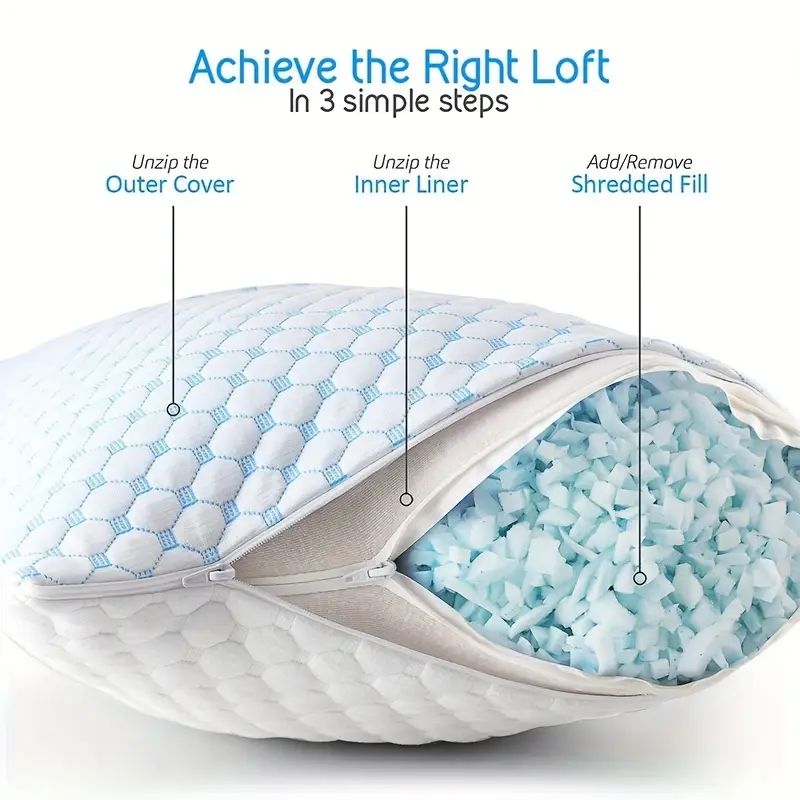
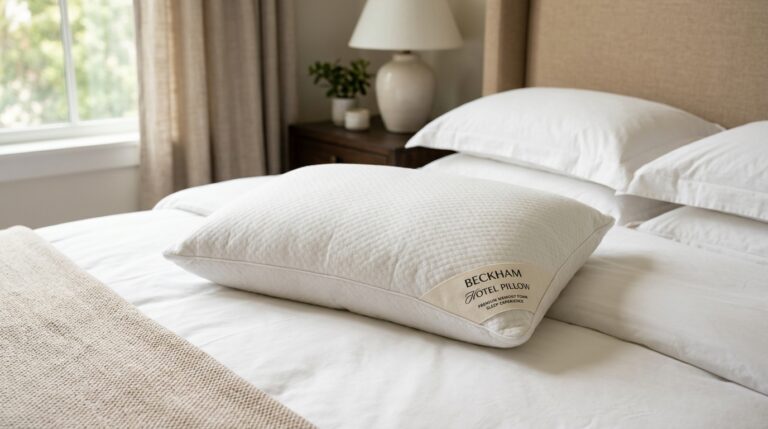
About This Pillow
Best For: Hot sleepers,Stomach or Side Sleepers
Sleeping Position: Side, back, and combination sleepers
Material: Soft down alternative microfiber,Memory Foam
Cooling Features: Breathable fabric with improved airflow
Size: King (Adjustable Foam)
Support: Full support
Feel: Plush and lightweight
What Are Cooling Pillows?
Cooling pillows are designed to reduce heat buildup around your head and neck. Some feel cool when touched, while others focus on airflow and breathability.
Common cooling features include:
- Breathable covers
- Ventilated or shredded foam
- Gel-infused materials
- Lightweight filling
- Moisture-managing fabrics
A cooling pillow may improve temperature comfort, but it will not necessarily stay cold all night.
How Do Cooling Pillows Work?
Cooling pillows manage heat in different ways.
Breathable covers: Allow better airflow around the sleeping surface.
Ventilated foam: Uses openings or channels to help air circulate.
Cooling fabrics: Aim to create a cooler-feeling surface.
Gel-infused materials: Are designed to help manage heat, depending on the pillow’s construction.
The best option depends on the complete design, not simply the word “cooling” in the product name.
About This Pillow
- Best for: Hot sleepers who prefer a plush pillow
- Material: Check the current product listing
- Cooling features: Verify the listed construction
- Size: Confirm before purchasing
- Support: Choose according to your sleeping position
Cooling Pillow vs Regular Pillow
The biggest difference is the design priority. A regular pillow may primarily focus on softness, support, loft, or general comfort. A cooling pillow adds heat management as one of its primary considerations.
| Feature | Cooling Pillow | Regular Pillow |
|---|---|---|
| Main focus | Temperature comfort + support | Support and comfort |
| Breathability | Often emphasized | Varies |
| Cover | May use cooling/breathable fabric | Depends on model |
| Fill | Varies | Varies |
| Cooling construction | May be included | Not necessarily |
| Best for | Hot sleepers | General sleepers |
This does not mean every cooling pillow will feel cooler than every regular pillow. A highly breathable conventional pillow can sometimes feel more comfortable than a poorly designed product that simply uses “cooling” in its marketing. The construction needs to be considered as a whole.
Are Cooling Pillows Good for Different Sleeping Positions?
Side sleepers: Look for sufficient loft and neck support alongside breathable materials. See our Best Pillow for Side Sleepers guide.
Back sleepers: Choose a height that supports your head without pushing it too far forward. Explore Best Pillow for Back Sleepers.
Stomach sleepers: A lower, softer pillow may be more comfortable. Read our Best Pillow for Stomach Sleepers guide.
Cooling features should never replace proper pillow support.
Cooling vs Breathable: What Is the Difference?
These terms are sometimes used interchangeably, but they describe different ideas.
Cooling
A cooling feature is intended to create or maintain a cooler-feeling sleep surface. This may involve specialized fabrics, gel materials, phase-change materials, or other technologies.
Breathable
Breathability is more about air movement.
A breathable material can allow air and heat to move through or away from the sleep surface. A pillow can be breathable without feeling cold to the touch. This is an important distinction when shopping. If you want a pillow that feels cold immediately, look for products specifically designed for that type of sensation. If you mainly want to avoid heat buildup, prioritize breathability and airflow.
Are Cooling Pillows Good for Hot Sleepers?
This is one of the situations where cooling pillows can make the most sense. Hot sleepers may notice pillow temperature more than people who generally sleep cool. A pillow that holds heat around the head can become uncomfortable after several hours. A cooling-focused construction may help reduce that sensation. But expectations should remain realistic. A cooling pillow is not an air conditioner. If the bedroom is extremely warm, changing the pillow alone may not solve the problem.
For better temperature comfort, consider the complete sleep setup:
- Bedroom temperature
- Fan or airflow
- Bedding weight
- Mattress material
- Pillowcase fabric
- Pajamas
- Pillow construction
A cooling pillow works best as part of that overall setup.
Are Cooling Pillows Good for Side Sleepers?
They can be.
Sleeping position and temperature preference are separate considerations.
Side sleepers should balance cooling features with sufficient loft and comfortable neck support. Read our Best Pillow for Side Sleepers guide to compare options based on sleeping position, pillow height, and comfort.
For side sleepers, look for:
- Enough height to support the head
- Appropriate firmness
- Breathable materials
- A cooling cover if desired
- A shape that remains comfortable throughout the night
Do not choose a pillow solely because it is cooling.
A pillow that stays cool but is too low or too high may still be uncomfortable.
“If you are a side sleeper, see our Best Beckham Pillow for Side Sleepers guide to compare options based on sleeping position.”
Are Cooling Pillows Good for Back Sleepers?
Back sleepers can also use cooling pillows.
The main consideration is finding the right loft. A pillow that is too tall can push the head forward. A pillow that is too thin may not provide enough support. If temperature is your main concern, look for a pillow that combines appropriate loft with breathable construction. A cooling pillow does not need to be extremely soft or extremely firm. The ideal firmness depends on your preferred sleeping position and comfort.
Are Cooling Pillows Good for Stomach Sleepers?
Stomach sleepers often prefer lower loft because the head is already positioned close to the mattress.
A very thick cooling pillow may still be uncomfortable even if it manages heat well.
If you sleep mostly on your stomach, prioritize:
- Low or adjustable loft
- Appropriate softness
- Breathability
- Comfortable neck positioning
If you prefer sleeping on your stomach, explore our Best Pillow for Stomach Sleepers guide to compare pillow height and comfort. Choose a cooling option only if its loft and support also suit your sleeping position.
Best Materials for Cooling Pillows
There is no single material that automatically makes a pillow the best cooling option.
Instead, different materials provide different characteristics.
Cotton
Cotton covers are popular because they can provide a breathable, familiar fabric surface.
They may feel more comfortable than heavily synthetic fabrics for some sleepers.
Memory Foam
Memory foam provides structured support, but traditional dense foam can feel warm.
Cooling-focused memory foam pillows may use additional ventilation or cooling materials.
Shredded Foam
Shredded foam can create more space between pieces than a single solid block, depending on the construction.
This can influence airflow and flexibility.
Gel-Infused Foam
Some manufacturers add gel to foam with the goal of improving temperature management. The actual performance depends on how much gel is used and how the rest of the pillow is constructed.
Specialized Cooling Fabrics
Some pillow covers are specifically engineered to create a cooler surface sensation. These may feel cool initially even before the pillow reaches your normal body temperature.
What to Look for in a Cooling Pillow
If you are shopping for one, these are the specifications worth checking.
1. Cover Material
Start with the outer fabric.
Look for breathable or cooling-focused materials rather than judging the pillow solely by its marketing name.
2. Internal Fill
Check whether the pillow uses:
- Fiber
- Memory foam
- Shredded foam
- Gel-infused foam
- Latex
- A combination of materials
The filling affects both temperature and support.
3. Airflow
Look for information about ventilation or airflow.
This can be more meaningful than simply seeing “cooling” in the product title.
4. Loft
Make sure the pillow height matches your sleeping position.
A cooling pillow with the wrong loft will not solve your comfort problem.
5. Washability
Check whether the complete pillow is washable or only the cover.
This matters for long-term maintenance.
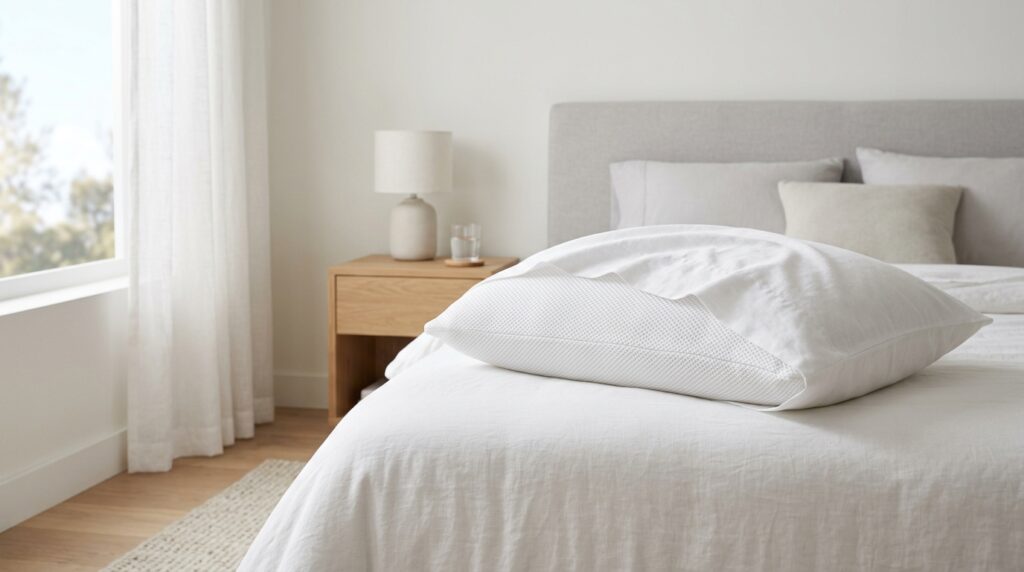
6. Pillowcase Compatibility
A thick or tightly woven pillowcase can change how the cooling surface feels.
If the pillow has a specialized cooling cover, avoid automatically covering it with multiple thick layers.
Cooling Pillow vs Memory Foam Pillow
These categories can overlap.
A memory foam pillow can also be a cooling pillow.
That is because memory foam describes the support material, while cooling describes a temperature-focused feature or design goal.
For example, a pillow can be:
- Memory foam + cooling cover
- Shredded memory foam + breathable cover
- Down alternative + breathable fabric
- Fiber fill + cooling fabric
This is an important distinction when building a pillow site.
Do not treat “cooling” as the opposite of “memory foam.”
They can describe two different characteristics of the same pillow.
To compare support materials and pillow construction, read our Memory Foam Pillows guide. It can help you understand how filling, loft, and comfort preferences differ from cooling features.
Cooling Pillow vs Down Alternative Pillow
A down alternative pillow generally focuses on a soft, fluffy feel. A cooling pillow focuses more heavily on temperature management. These categories can overlap too.
For example, a down alternative pillow may have a breathable cotton cover, while a dedicated cooling pillow may use specialized cooling materials.
If your priority is:
Soft hotel-style comfort:
Look at down alternative pillows.
Heat management:
Look at cooling pillows.
Structured support:
Consider memory foam.
Explore our Down Alternative Pillows guide to compare soft, fluffy pillow options with cooling-focused designs. Your choice should balance temperature comfort, preferred feel, and sleeping position.
How to Make Any Pillow Feel Cooler
You do not always need to replace your entire pillow.
Several changes can improve temperature comfort.
Use a Breathable Pillowcase
A lightweight breathable pillowcase can allow the pillow’s surface to feel less enclosed.
Improve Bedroom Airflow
A fan or better air circulation can help prevent heat from accumulating around the sleeping area.
Avoid Excessively Thick Bedding
Heavy bedding can increase overall body temperature, making the pillow feel warmer as well.
Keep the Pillow Dry
Moisture from sweat can make a pillow feel less comfortable and can affect how the fabric feels.
Rotate Pillowcases
Regularly changing pillowcases can help maintain a cleaner and fresher sleeping surface.
Does a Cooling Pillow Stay Cold All Night?
Usually, you should not interpret “cooling” to mean that a pillow will remain refrigerator-cold throughout the entire night. Most cooling technologies are designed to manage heat, improve airflow, or create a cooler-feeling surface. Your body continuously transfers heat to the pillow. Eventually, the pillow’s temperature will be influenced by the surrounding environment and your body.
Therefore, a better question is:
Does the pillow help prevent uncomfortable heat buildup?
That is a more realistic way to evaluate cooling performance.
Common Cooling Pillow Mistakes
Choosing Cooling Over Support
A pillow can feel cool but still have the wrong loft.
Assuming All Cooling Materials Work the Same
Gel, breathable fabric, ventilated foam, and specialized cooling covers have different characteristics.
Ignoring the Pillowcase
The pillow’s cooling cover may perform differently when covered with a thick, heat-retaining pillowcase.
Expecting the Pillow to Fix a Hot Bedroom
Room temperature remains one of the biggest factors affecting sleep temperature.
Buying Based Only on the Word “Cooling”
Read the actual specifications.
Look for the material, construction, cover, airflow design, and care instructions.
Frequently Asked Questions
Do cooling pillows really work?
They can help improve temperature comfort, but performance varies by construction and sleeping environment. A cooling pillow is not expected to remain cold all night.
What is the best material for a cooling pillow?
There is no universal best material. Breathable fabrics, ventilated foam, shredded foam, gel-infused materials, and specialized cooling covers can all be used in different designs.
Are cooling pillows good for hot sleepers?
They can be particularly useful for hot sleepers because their design focuses on reducing or managing heat around the head and neck.
Can a memory foam pillow be cooling?
Yes. Memory foam describes the filling/support material, while cooling describes a temperature-management feature. A memory foam pillow can have a cooling cover, ventilation, gel, or other cooling construction.
How long do cooling pillows last?
There is no fixed lifespan for every cooling pillow. Durability depends on materials, construction, usage, washing, and how well the pillow maintains its original support.
Does a cooling pillow need a special pillowcase?
Not necessarily, but a thick or poorly breathable pillowcase can change how the pillow’s cooling surface feels. A lightweight breathable pillowcase may better preserve the intended feel.
Is the Beckham Cooling Pillow different from the Beckham Original Pillow?
Yes. Beckham treats its cooling pillow as a separate product/category from the Original Down Alternative Pillow. They are designed around different primary comfort characteristics
One Comment