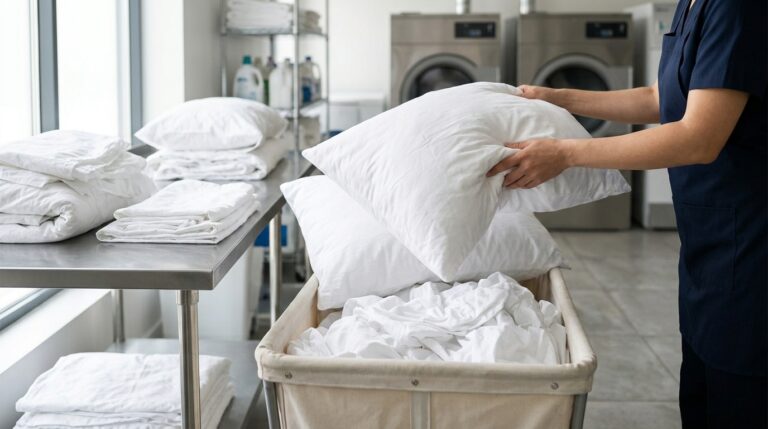

Beckham Hotel Collection Pillow Protector Review
A good pillow can last for years, but only if it stays clean and dry. Sweat, body oils, spills, dust and allergens all work their way into a pillow over time, and once they are inside the fill they are hard to remove. A pillow protector is the simplest way to slow that process down. In this beckham pillow protector review, we look at what the protector does, how it fits the brand’s pillows, and whether it is worth adding to your bed.
Beckham Hotel Collection pillows are popular for their plush down alternative fill and hotel style feel. The Original Down Alternative Pillow is sold as a two pillow set with an 8 inch loft, 1,050 grams of fill, and a 250 thread count cotton cover. A protector made for the same brand is designed to fit those pillows without squeezing the fill or changing the loft. A protector that is too tight raises loft, while one that is too loose lets the pillow slide around inside it.
If you have not read our full review of the pillows themselves, start with our Beckham Hotel Collection Pillow Review to see how the fill, loft and cover perform in daily use. You can also browse the full range on our homepage before you decide what to protect.
Quick Verdict
The Beckham Hotel Collection pillow protector is a practical add on for anyone who wants to keep a good pillow cleaner for longer. It adds a thin barrier between your head and the pillow, which helps block sweat, oils, spills and dust. It is most useful for new pillows, guest rooms, and allergy sensitive sleepers.
It is not a magic shield. No protector makes a pillow last forever, and it cannot fix a pillow that is already flat, stained or past its useful life. The value comes from starting early and washing it on a regular schedule. If you already own Beckham pillows and want them to stay fresh, a protector is one of the cheapest upgrades you can buy for your bed.
What Is a Pillow Protector and Why Use One
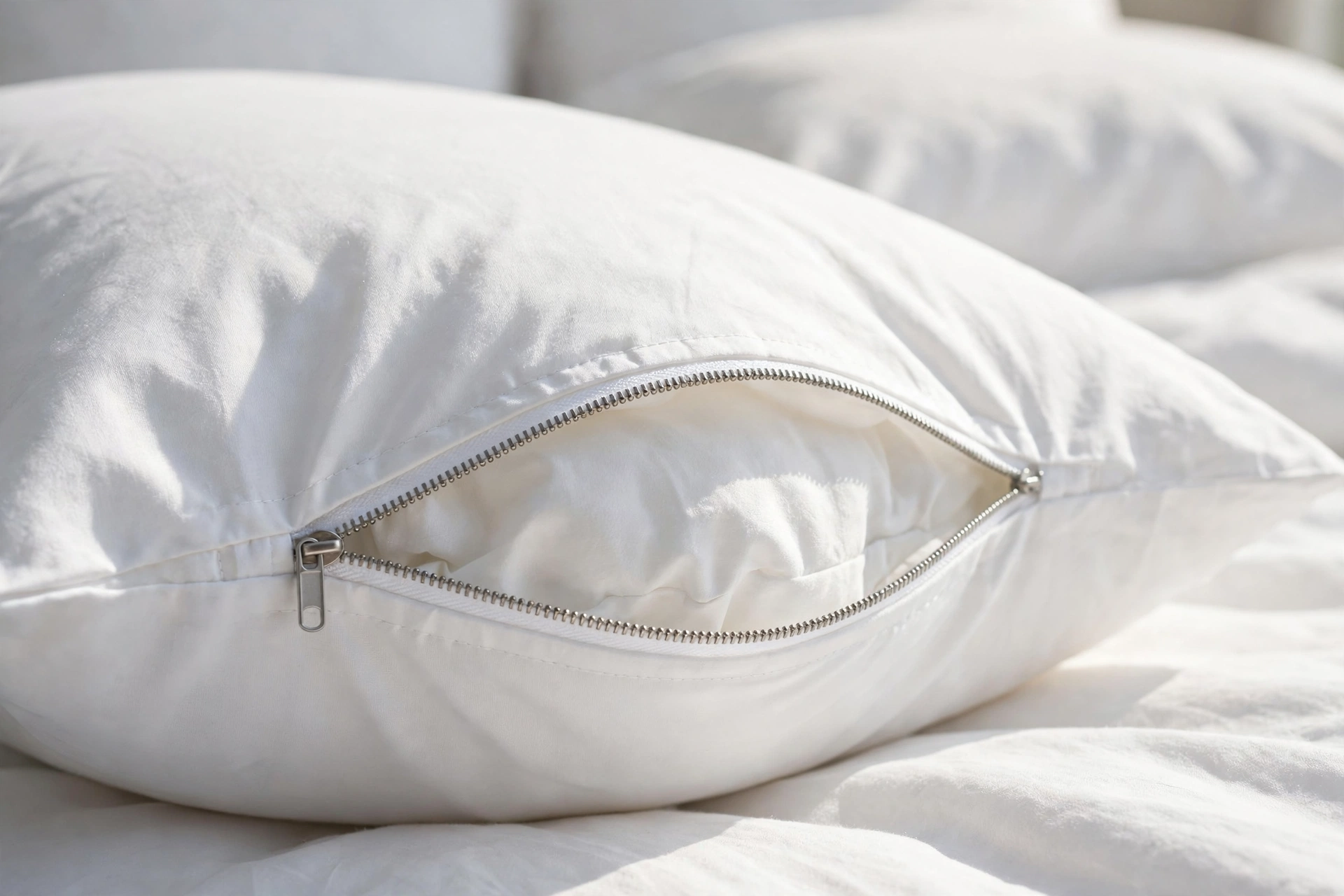
A pillow protector is a fitted cover that goes over the pillow and under the pillowcase. It usually closes with a zipper so the whole pillow is enclosed. Its job is to block the things that stain and age a pillow. Nightly sweat, skin oils, drool, makeup and the occasional spill all pass through a normal pillowcase over time, and a protector catches most of that before it reaches the fill.
The difference shows up after a few months. A pillow used without a protector often develops yellow stains and a stale smell that washing cannot fully remove. A pillow used with a protector and washed regularly stays brighter and fresher, because the protector takes the wear instead of the pillow.
Protectors also help with allergens. Dust mites live in bedding, and a tightly woven protector with a full zipper closure makes it harder for them to reach the pillow. It does not cure allergies or replace cleaning your bedding, but it is a useful layer in a cleaner sleep setup.
Beckham Pillow Protector at a Glance
| Feature | What to Look For | Why It Matters |
| Closure | Full zipper | Keeps the pillow fully enclosed and blocks dust from the open end |
| Barrier | Waterproof or water resistant layer | Stops spills and sweat reaching the fill |
| Top fabric | Soft cotton or cotton blend | Feels smooth under the pillowcase and stays quiet |
| Fit | Matches Standard and Queen or King sizes | A snug fit protects without squeezing the fill |
| Washability | Machine wash and tumble dry low | Lets you clean it often without special care |
| Noise | No crinkle sound when you move | A noisy protector disturbs light sleepers |
Check the current product listing before you buy, because materials, sizes and care instructions can change. The details below describe what to check and how to judge each feature in real use.
Fit and Sizes
Fit is the first thing to get right. Beckham pillows come in Standard and Queen, King and Euro sizes, so the protector must match the pillow you own. A Standard and Queen protector fits the 20 by 26 inch Standard and 20 by 30 inch Queen pillows, while a King protector fits the 20 by 36 inch King pillow. Measure your pillow before ordering rather than guessing from the bed size.
A protector that fits well feels snug but not tight. You should be able to zip it closed without forcing the zipper, and the pillow should keep its normal shape inside. If the protector pulls the corners in or compresses the middle, it is too small and it will raise the loft. If the fabric bags and folds around the pillow, it is too large and it will bunch under the pillowcase.
For most sleepers, the Standard and Queen size covers the pillows they actually sleep on, and King covers the longer pillows on larger beds. Our Beckham Hotel Pillow Sizes Guide lists the exact dimensions of every size so you can match the protector to your pillow with confidence.
Waterproof or Water Resistant
Protectors fall into two groups. A waterproof protector has a thin barrier layer, often made from polyurethane, that stops liquid passing through. A water resistant protector slows liquid down but may let a large spill through if it sits for a while. For most homes, a waterproof protector is the safer choice.
The barrier layer is usually bonded to the underside of the top fabric, so you feel soft fabric on the outside and the barrier stays hidden. A good barrier is thin and flexible, while a thick or stiff one can feel plasticky and trap heat. Look for a protector that describes itself as breathable as well as waterproof.
Test the barrier when the protector arrives. Lay it flat, pour a small amount of water on the top fabric, and wait a minute. On a waterproof protector the water should bead or sit on the surface without soaking through. Wipe it dry and the underside should feel dry. Do not leave water sitting on it for hours, because even a good barrier is tested against spills, not against standing water.
Zipper and Construction
The zipper is the part that fails first on cheap protectors, so it deserves attention. A good protector uses a full length zipper that runs along one side and closes completely, with a small fabric flap over the end so the teeth do not touch your skin through the pillowcase. The zipper should move smoothly without catching the fabric, and it should stay closed through the night.
Check the stitching too. Turn the protector inside out and look at the corners, where stress is highest. Neat, even stitching with no loose threads is a good sign. Loose threads or thin seams at the corners can split after a few washes, and once a seam opens the protector no longer fully encloses the pillow.
Comfort and Noise
The most common complaint about pillow protectors is noise. A stiff barrier layer can crinkle every time you turn your head, and light sleepers notice it at once. Put the protector on the pillow, add the pillowcase, and lie on it for a few minutes. Turn your head from side to side and listen. A quiet protector makes almost no sound, while a noisy one rustles with every movement.
A protector also changes the pillow feel slightly. It adds a thin layer between your head and the fill, which can make a plush pillow feel a touch firmer. Most sleepers adjust within a night or two. If you are very sensitive to feel, try the protector on one pillow first before you buy a full set.
Washing and Care
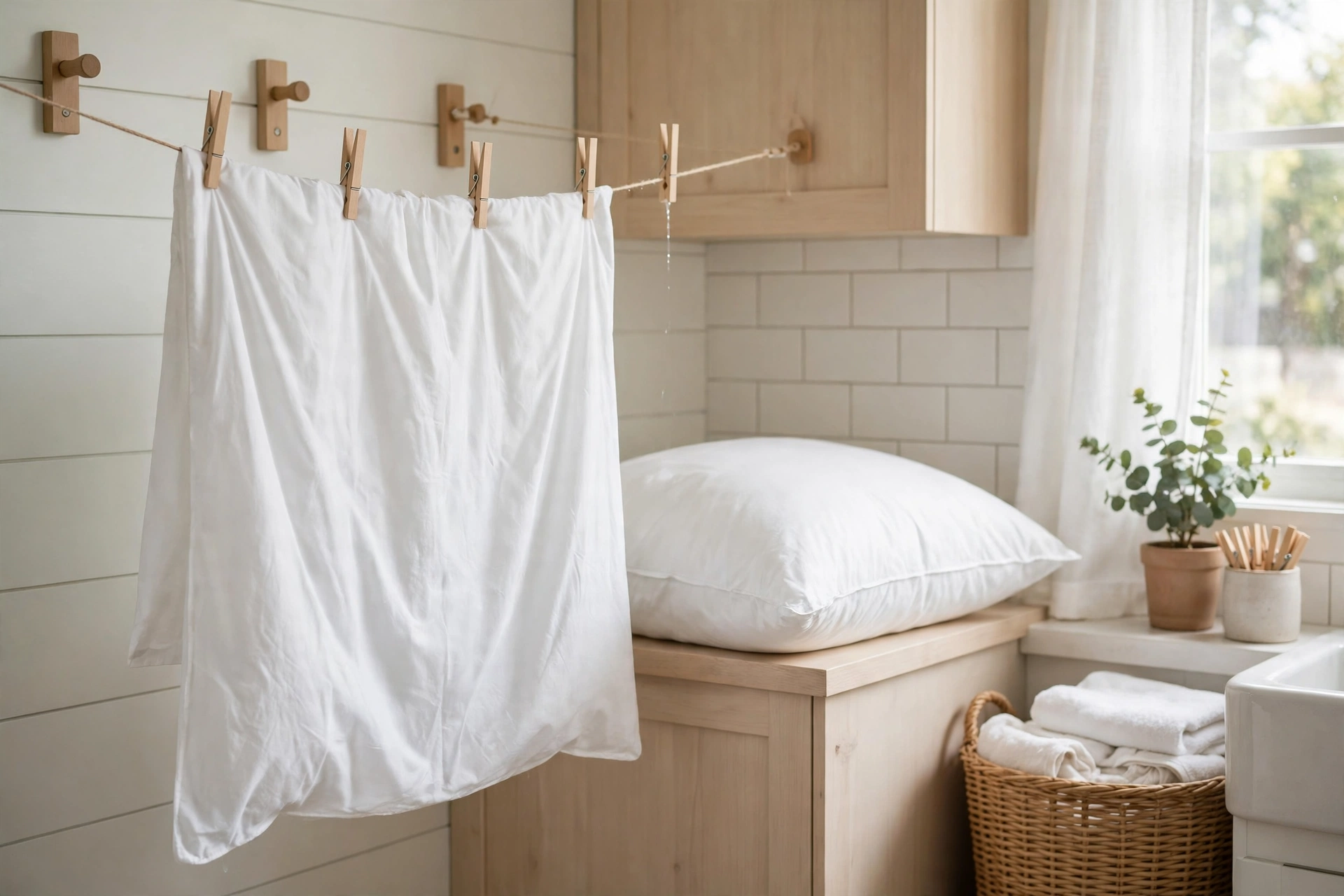
A protector only works if you wash it. The barrier catches sweat and oils, and those build up on the fabric just as they would on a pillowcase. Wash the protector every one to two months in normal use, and more often if you sweat heavily or share the bed with kids or pets. Remove it from the pillow, close the zipper before washing so the teeth do not snag other laundry, and wash it with similar light colors.
Most protectors are machine washable in cold or warm water on a gentle cycle, followed by tumble dry low. Always check the care label, because heat can damage the waterproof barrier. High dryer heat is the most common cause of a barrier that peels or cracks, so low heat is safer. If the barrier starts to peel or feel stiff after washing, replace the protector.
Washing the protector regularly also protects the pillow underneath. Our guide on how to wash Beckham Hotel Collection pillows covers the full wash routine for the pillows themselves, including water temperature, drying and fluffing. With a protector in place, you can wash the pillows less often and let the protector take the regular cleaning instead.
Pillow Protector vs Pillowcase vs Encasement
Shoppers often mix up these three products. A pillowcase is the decorative cover you see on the bed. It looks good but offers almost no barrier against sweat or spills. A protector is the functional layer underneath the pillowcase, with a waterproof barrier and a full zipper closure. An encasement is a heavier duty protector with a finer weave and a more complete seal, often chosen for strong allergy control or for guest rooms and rentals.
| Product | Barrier | Closure | Best For |
| Pillowcase | None or minimal | Open end | Looks and light dirt protection |
| Pillow Protector | Waterproof or water resistant | Full zipper | Everyday sweat, spill and dust protection |
| Encasement | Full barrier, fine weave | Full zipper, sealed seams | Strong allergy control and rental use |
For most homes, a protector is the right middle choice. It costs little, washes easily, and covers the daily risks. An encasement makes sense if allergies are a major concern or if the pillow will be used by many different guests. A pillowcase alone is not enough to protect a good pillow, because it lets sweat and oils through over time.
Beckham Pillow Protector Review Pros and Cons
Pros
- Adds a waterproof or water resistant barrier that keeps sweat, oils and spills out of the fill
- Full zipper closure encloses the whole pillow and blocks dust
- Fits Beckham pillow sizes when matched correctly, so loft and feel stay close to normal
- Machine washable, so it is easy to clean on a regular schedule
- Low cost compared with replacing a stained or worn pillow
- Useful for guest rooms, rentals, kids rooms and allergy sensitive sleepers
Cons
- Adds a thin layer that can make a plush pillow feel slightly firmer
- Some barrier layers trap heat or make a crinkle sound
- The zipper and seams are the first parts to wear out
- High dryer heat can damage the waterproof barrier
- It cannot save a pillow that is already stained, flat or past its useful life
Who Should Buy a Pillow Protector
A protector is worth buying if you just bought new Beckham pillows and want them to stay fresh. It is also worth buying for a guest room or a rental, where many different people use the same pillow and hygiene matters more. Allergy sensitive sleepers benefit from the extra barrier, and parents of young kids or pet owners benefit from the spill protection.
You can skip a protector if your pillows are already old and due for replacement, because protecting a worn pillow does not restore it. You can also skip it if you already use an encasement, which does the same job with a heavier build. If you are very sensitive to heat or noise, test one protector first rather than buying a full set.
Price and Value
We do not list a price here, because prices and availability change often and a number we print today can be wrong tomorrow. Check the current listing before you buy, and compare the protector price with the cost of replacing the pillow it protects. A protector usually costs a small fraction of a pillow set, so it pays for itself if it extends the life of even one pillow by a year.
Final Verdict
This beckham pillow protector review comes down to a simple question. Do you want your Beckham pillows to stay cleaner, drier and fresher for longer. If the answer is yes, a protector is a sensible buy. It is cheap, easy to wash, and it takes the daily wear that would otherwise go straight into the fill. Choose the right size, check that the barrier is truly waterproof, and wash it on a regular schedule.
We are an independent review site and do not manufacture Beckham Hotel Collection products. Sizes, materials and specifications can change, so check the current product listing before you buy. A pillow protector supports cleaner sleep and longer pillow life, but it does not treat pain, snoring, allergies or any medical condition. If you have ongoing sleep or health concerns, talk with a qualified health professional.
Does Beckham Hotel Collection sell a pillow protector?
Beckham Hotel Collection offers pillow protectors designed to fit its pillows, and they are sold alongside the pillow sets. Check the current product listing for sizes, materials and care instructions before you buy, because details can change.
What size pillow protector fits a Beckham pillow?
Match the protector to your pillow size. Standard and Queen protectors fit the 20 by 26 inch Standard and 20 by 30 inch Queen pillows, and King protectors fit the 20 by 36 inch King pillow. Measure your pillow before ordering.
Is the Beckham pillow protector waterproof?
Most Beckham pillow protectors are sold with a waterproof or water resistant barrier layer. Check the listing for the exact wording, and test it at home with a small amount of water to confirm the barrier works.
Will a pillow protector change how my pillow feels?
A protector adds a thin layer, so a plush pillow can feel slightly firmer. Most sleepers adjust within a night or two. If you are sensitive to feel, try one protector first.
Does a pillow protector make noise when you sleep?
Some protectors crinkle when you move, especially if the barrier layer is stiff. A thin, flexible barrier with a soft cotton top is usually quiet. Test it on your pillow for a few nights and listen for rustling.
How often should I wash a pillow protector?
Wash it every one to two months in normal use, and more often if you sweat heavily or share the bed with kids or pets. Close the zipper before washing, use a gentle cycle, and tumble dry low to protect the barrier.
Can I wash a pillow protector with my pillow?
No, wash them separately. The protector is made for frequent washing, while the pillow needs gentler and less frequent washing. Remove the protector, close its zipper, and wash it on its own.
What is the difference between a pillow protector and a pillowcase?
A pillowcase is the decorative cover you see on the bed and offers almost no barrier. A protector sits under the pillowcase, adds a waterproof barrier, and closes with a full zipper.
Do pillow protectors help with allergies?
A protector with a full zipper closure makes it harder for dust mites and allergens to reach the pillow. It does not cure allergies and does not replace regular washing of your bedding.
How long does a pillow protector last?
A good protector lasts one to two years with regular washing on low heat. Replace it when the zipper fails, seams split, or the waterproof barrier peels or feels stiff, because a damaged protector no longer protects the pillow.